


Hi, my friend. Today I’m going to teach you how to take back control of your mind through creative work systematically. We live in one of the most distracted periods in human history. Probably you feel brain-rotted a lot of the time, and that’s not necessarily your fault. It’s that you live in a really overwhelming media environment, and what we need to do now is build skills so that you can fortify yourself against distraction.
Distraction, because phones aren’t going away. Social media isn’t going away. We need to learn to adapt. The good news is it’s going to be fun. If we do this the right way, it’s going to be one of the most meaningful and engaging experiences of our lives because we’re going to replace consumption with creative work, pursuing a passion, pursuing your craft.
Today, I’m going to teach you exactly how to start. Maybe not, but I’m going to try to instill the beliefs and principles you need to guide you.
For the last 3 ½ years, I have been obsessed with replacing Facebook reals consumption with meaningful work. Because in a perfect world, we could take this amazing technology of the Internet and social media and use it for good by writing and creating music, creating art, whatever our passions happen to be, so first we’re going to go through the exact system that I want you to program into your life. Then we’ll spend some time talking about the beliefs you need to make this possible.
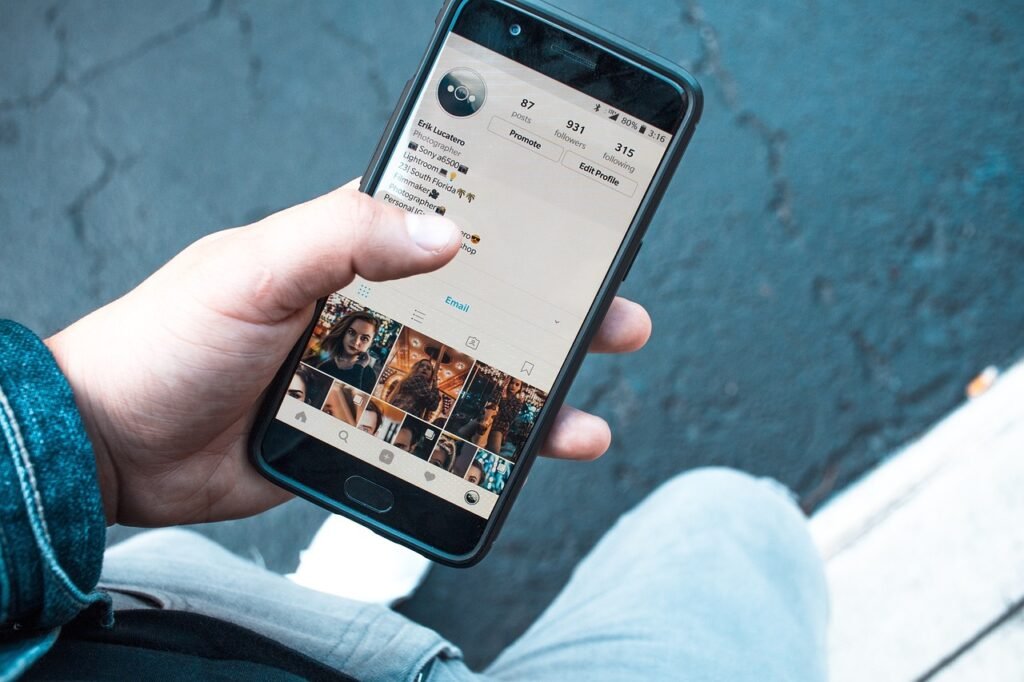
The next 30 days, it’s very simple. You’re just going to wake up, and you’re going to go to your journal first thing in the morning before you go on your phone. And you’ve probably heard that advice before. Here’s why it’s important. You have so many ideas in your brain, and often it can feel like you don’t have any ideas because you’re so overwhelmed with noise.
You spend a lot of time on social media just consuming—information you didn’t choose for yourself. And you need to get into the practice of emptying the reservoir that’s up here. So in the beginning, you’re not going to judge your ideas; you’re not going to try to write something beautiful, but you’re going to set aside 30 minutes for yourself in the morning where you can fill 2 pages with longhand writing.
If you’re familiar with The Artist’s Way by Julia Cameron, she recommends 3 longhand pages of writing called the Morning Pages. It’s a very similar practice. A lot of people live by this kind of thing. You don’t need to get perfectionistic with it.
I want you to get a pen and a piece of paper and practice emptying your mind. This is a meditative practice, and it shows you what you’re made of. You realise very quickly that you actually do have ideas. You realise quickly what you care about, what your attention gravitates towards, and those are beautiful pieces of data that you can then use in whatever creative work you’re going to use to replace your consumption habits.
30 minutes in the morning before you go on your phone. Combine that with the morning walk, whatever you want. That’s step one.
Step 2 is spending an hour a day consuming meaningful media you choose for yourself. Your brain and soul are likely starving for nourishment. If 100% of your media diet comes from information, videos and reels you didn’t choose for yourself, you’ll be overwhelmed with noise and starving for nourishment.
Like living on a diet of airheads, extremes and fast food, you get stimulated all the time, but you don’t really ever feel full. So, by pursuing stuff you care about, by finding a fiction book or a podcast or an album of music that really excites you. You start to nourish yourself again: spend an hour walking, listening to an audiobook or reading something in a quiet room. If you have no idea where to start with this, you can pick one of the great classic novels of our time. Or you can read something easier, like a collection of short stories that speaks to many of the emotional problems we talk about.

In this place, you might find it interesting. You might find it a little bizarre and scary and uncomfortable, as some of the best art is. You get what I’m saying? OK. This practice also requires a metabolic response from your body. You need to challenge your body. When you spend a lot of time thinking, creating or consuming whatever you need to uncoil your brain, you do that through physical practice.
At first, this is just walking. But over time, I’d recommend building a workout practice, some physical endeavour that challenges you. And that is exciting. For me, it’s bodyweight, callisthenics, climbing, you know, resistance training. I love that, and I walk all the time and things like that.
Find a thing you enjoy that is challenging and get your body to sweat, especially if you’ve spent some time writing during the day. Some of my favourite writers. All live by a dedicated fitness practice to get out of their brains and into their bodies. Joyce Carol Oates runs and often finds that some of her best ideas come during her runs. Haruki Murakami does as well. Same thing, right? Everyone’s going to have a different approach.
You’ll find what your body craves. That, but understand its power to reconnect you to your humanity. Understand how physical practice feeds the creative practice. And in the beginning, you start with very small things, and you slowly but surely fall in love with the practices that make your body feel good, instead of drained and overstimulated all the time.
And then lastly, within yourself. You’re going to connect with one human being. This can mean reaching out to a family member, a friend or a loved one; having a deep conversation with your significant other; or having an honest human conversation with the fast-food worker you happen to run into or whatever.
This can look like a lot of different things, but I was hoping you could make the effort to connect with another human being. Not so that you can get something from them, but so that you can feel connected to someone else with a central nervous system who’s probably not all that different from you. If you do these things, you’re going to feel like a human being again, and you’ll slowly pull yourself out of the brain rock.
In theory, that’s how this practice works. And I know that sounds really dead simple. That might not excite the part of your brain that wants a really complicated or advanced system to turn your life around. But you have to start with the smallest thing possible so you can do it and feel motivated to do it again the next day.
What I think a lot of people do, people like us who tend to gravitate towards black-and-white thinking, is we want to push ourselves to the absolute limit when we’re starting something, and then we can’t do it. We don’t have the capacity for it. So we burn out quickly and then go back to self-soothing.
This is a vicious cycle we’re trying to break, and you do that through gentle exposure to meaningful practices. That’s what the system looks like, so try this for a week and let me know how it goes.
See if it hurts to stimulate more exciting thoughts. See if it makes you want to do more. And then you start applying progressive overload. You start doing more just because you want to, because you start to crave these things, and that’s exactly what we want. Then you start the snowball of positive momentum, where you’re naturally writing more, not because it’s built in.
Your perfect plan to write 3 pages today instead of two. But because your soul wants to keep going, that’s great. Maybe you want to push yourself a little more in your physical practice because you want to. That’s great. Maybe you want to, like, go out of your way to talk to more people. Go out of your comfort zone because you’re like, you want to understand that? OK.
Here are the beliefs I’ve found most helpful over the last three-plus years of doing this work. Understand what the goal actually is. So let’s say we’re trying to go from consumer to creator. What is the goal there? The goal is to create a life so exciting you don’t need to run away from it.
So many people, when they’re trying to reduce their scrolling or consumption habits, fixate on the scrolling or the distraction itself. That’s where you get blocker apps, time-blocker apps, which I don’t have a problem with, but I think they’re Band-Aid solutions. Or people say, you know, I’m going to delete the apps or whatever.
I’m going to try to, I’m going to impose all of these restrictions on myself to minimise my ability to distract myself. When in reality, it’s like, what if you were so captivated by something better that you weren’t even tempted?
Imagine if you could build a life that was so exciting you didn’t want to escape from it. Imagine you had something better to do in your free time rather than numb yourself into oblivion. To me, that’s a much more exciting outcome than using self-control to box yourself in. It’s like putting yourself in a straitjacket.
What if you could live for something better? To me, that’s what the real goal is, and that’s why creativity has always been this North Star as opposed to consumption. For me, that’s what excites me. I want to write and perform stories. I want to get on stage. I want to, like, make movies and do all the fun things that make my soul come alive.
That might look different for you. That might be the physical practice of the business or the OR. And it can be any craft that requires you to invest your full attention in it and then create something that could never have existed without you.
It’s got lots of different forms, but to me that’s a better North Star. Then I limit myself so I’m not tempted by the distractions around me. The distractions around me all the time. The goal is to create something better than destruction.
Also, understand that your natural proclivity for distraction can work to your advantage. So, very likely, you’re a young person reading this between the ages of 15 and 40. You’ve spent many years now engaged in a hyper-stimulating media environment that you are not psychologically prepared for.
You’ve been hit with digital distractions at unprecedented rates every day for many, many days. And I fall into that camp as well. What that has done is it’s actually, I mean, it’s made you probably addicted to social media. But on the other hand, Increased your capacity for stimulation, which means you can handle a lot thrown at you because you’ve become accustomed to it.
Imagine if you could apply that capacity to something worthwhile. It means you can handle many ideas. You’ve consumed more stories and more media than any generation of humans before you, and if you apply that to a creative practice, you realise you have a lot to give. And you realise that you really don’t want to be distracted as much as you want to be engaged.
And if you find things to engage you, if you put in the effort and the time to build practices that engage you and you realise you have so much to give, you could probably create for a long period of time, right? I mean, it will take practice and skill-building, as all things do. But I think that your threshold, like your meter for engagement, is extremely high, and that’s an exciting prospect. Right, that your threshold for distraction actually makes you a powerhouse in terms of creativity.
I’m still trying to get this idea precise with myself. I’m not sure if it’s for real or if it’s a cope, but I invite you to spend some time with it and see if it rings true for you in your own practice. Also understand that entropy is the default state, so if you constantly or over and over again, fall, get on track and then fall off track.

You lock in, and then you fall off. Understand that entropy is normal; like they’re falling back into bad habits is normal. It’s not that you’re fundamentally flawed, and it will always be a part of the process. Let’s say you invest in creative practice, find the passion of your life, and give yourself to it for 10 years. Guess what? And 10 years later, you’re still going to struggle with entropy. It doesn’t go away.
Steven Pressfield talks about this in The War of Art. He defines it as resistance, and it’s a universal force that doesn’t go away, especially as a creative. So you have to learn to befriend it in your own brain, all of your proclivity to distraction and all.
I would rather, you know, mess around today or vape or do something other than create. I don’t know what it sounds like for you, but understand that that’s always going to be in the room with you, and you’re better off talking to it, engaging in conversation with that part of your psyche rather than saying no, I’m ashamed of you. I don’t want to see you. I don’t want to look at you. I’m just going to log in until you’re gone. It’s not the way to go. Engage in conversation; have love for that part of you.
That part of you is probably connected to the inner child part you need for creativity. So much of my best writing comes from the chaos within my own brand. My work would not be alive without it. So understand that.
The same things that pull you down into chaos and entropy. Be the very dark vitality you need to create something meaningful, to create maybe your first piece of honest work that resonates with another nervous system across the Internet. Understand that AI and all the chatbots coming for us, which will create hyper-addictive media, will never be able to understand the psychic stress, chaos, turmoil that you have within you that then becomes your competitive advantage in the creative ecosystem.
You with me? Great. Entropy is the default. It’s not going away. Learn to live with it. Understand that this game of creative work, going from consumer to creator, is an infinite game. It is a lifelong battle uphill, and that’s what’s fun.
Go ahead and imagine Sisyphus smiling, because that’s you. Lastly, understand that fortifying our minds against distraction by aiming our attention at something better is a skill. Is a skill. So I want you to stop talking to yourself as if you’re fundamentally broken. Stop over-identifying with the things you struggle with.
Everything that we’re talking about here is essentially a skill issue. And that’s a really empowering thought because it means that, through practice, through repeated exposure, through patience and intentional effort. You can achieve this transformation for yourself. And understand that it’s going to be fun and engaging. If it’s not fun and engaging, you’re not going to stick with it, and it won’t happen.
This is an infinite game, like we said, and it’s a skill that you can practice. Everything that you want. Going from consumer to creator, building a meaningful life that you don’t want to escape from, finding your passion in this limited life and then throwing yourself at it so that you have something better to do than infinitely scroll in the age of consumption.
All of those result from a few specific choices you make over and over because you want to. OK, your attention goes to what is meaningful. Right. You’re not broken. Your attention is going to what you care about.
So I invite you to bring new things into your mental ecosystem to excite you. Let your attention latch on to something nourishing. Give yourself to it. Follow the simple 4 steps we talked about earlier in the article, then notice all the thoughts that come up.
See if these beliefs are true for you. Find your own journey with it. You’re gonna be different than me, but we are in this together, and this is effectively our resistance against all of the forces that want to reduce us and stop us.
They want to take away from us our human agency if we do nothing, if we don’t engage our creative spark, if we don’t challenge ourselves, if we don’t intentionally develop our human skills of thinking, writing, communicating, creating art, training our bodies, discovering what these physical forms can even do.
We will be reduced to zombies. That’s the trajectory we’re on. And that sounds a little fear-mongering. It doesn’t sound extreme, but I think you understand what I’m trying to say. And that’s where a lot of my frustration comes from; that’s the core spark of anger that got me started on this journey in the 1st place, that got me to start writing.
That negative emotion can be really powerful. It can be the inciting force that gets you to start something.
So if you’re frustrated with yourself in any way, take responsibility for what you can and then get to work. Because in a very real sense, my friend, we need you.